

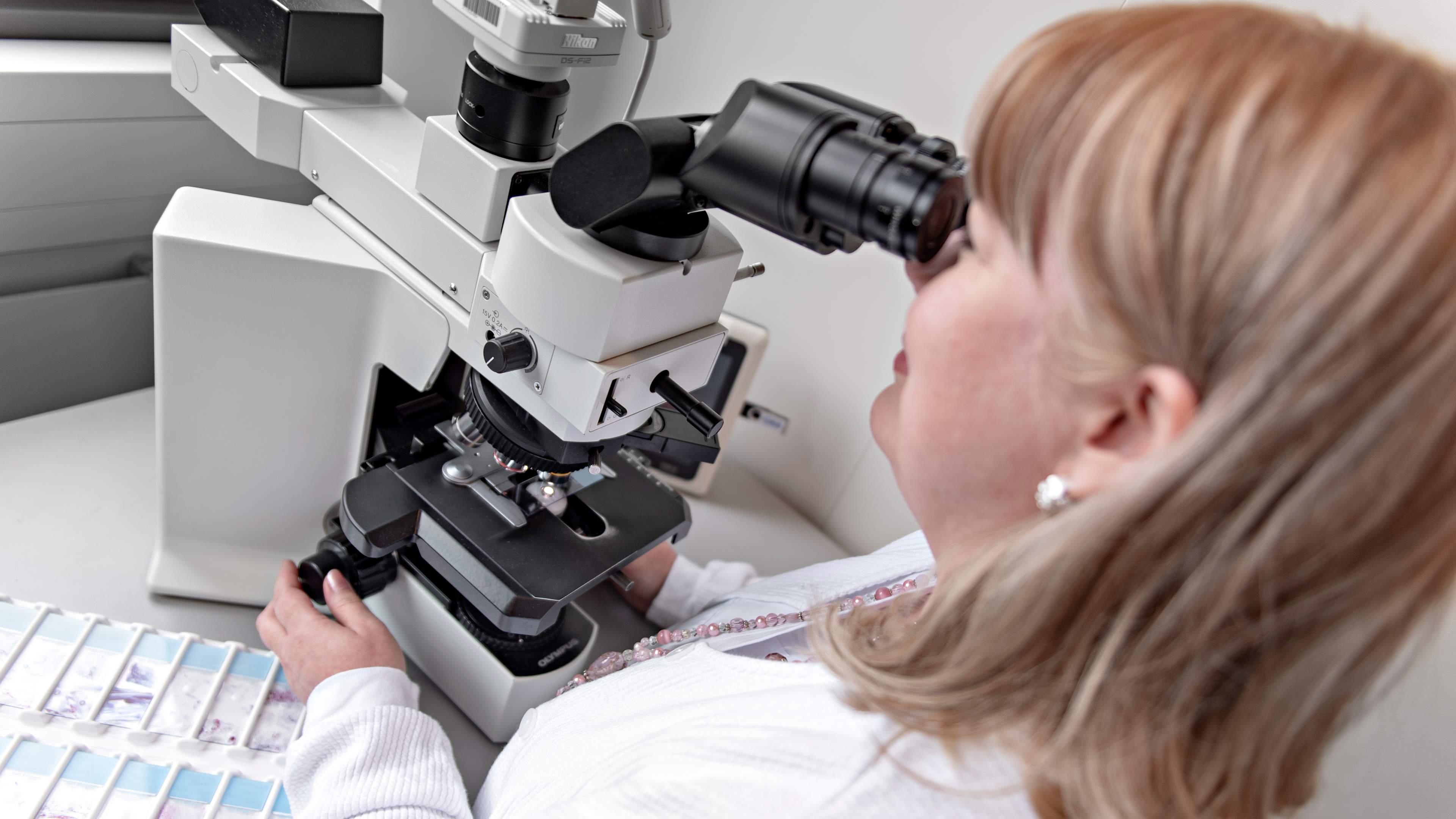
The most common gynecological sample is the cytological examination, i.e. the Pap smear. Nowadays, HPV testing is often used as the primary method for cervical cancer screening. The HPV test detects whether a woman carries high-risk human papillomavirus types that predispose to cervical cancer and its precursors. If the HPV test is positive, the Pap smear is examined for malignant cell changes and precursors in the cervical area.
Through screening samples, precancerous changes can be detected and treated at such an early stage that cancer does not develop at all.
Pap and HPV samples are collected by a laboratory nurse or another healthcare professional trained in sample collection. It is not recommended to take the sample during menstruation. The samples are examined in microbiology and pathology laboratories.
In Finland, cervical cancer screening is offered to women aged 30–65. In some wellbeing services counties, 25-year-old women are also invited to screening.
Screening invitations are sent every five years based on population registry data, so no separate registration is needed. You can reschedule the proposed sample collection time; instructions are included in the invitation letter.
Screening results are sent by personal letter. If further examinations are needed based on the screening, you will receive an invitation to them and possibly to subsequent procedures and treatments.
If symptoms occur, a physician will assess the need for Pap and other examinations based on symptoms and findings.