

Go to page content

Computed tomography of the coronary arteries

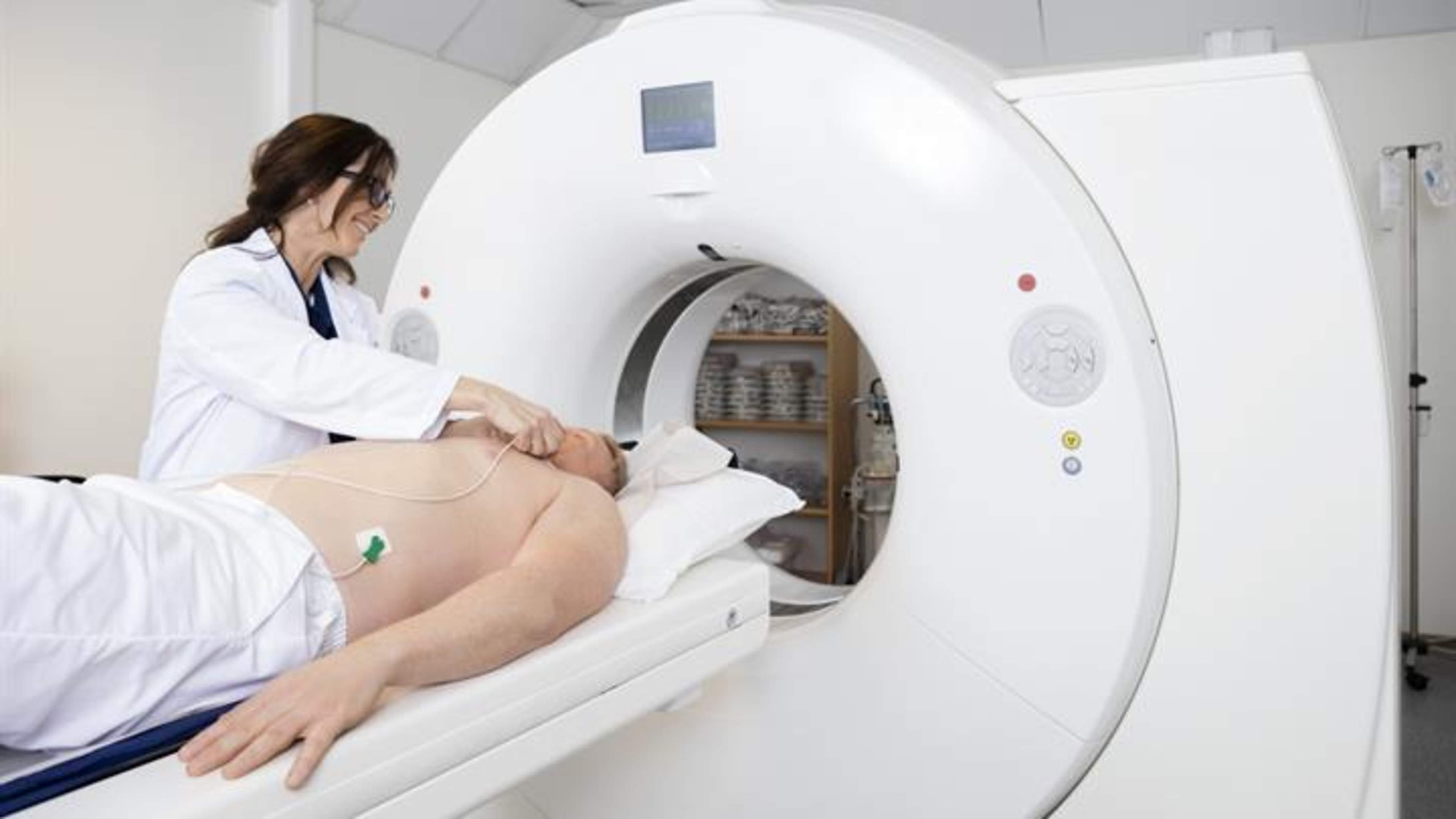
Modern high-speed computed tomography (CT) scanners enable detailed imaging of the moving heart.

Computed tomography of the coronary arteries reveals whether there is coronary artery disease i.e. atherosclerosis in the coronary arteries and, if present, how extensive the changes are. 

This examination can reliably rule out coronary artery disease. However, CT examination does not determine the degree of arterial narrowing; additional tests may be needed for that. 

Although this is a radiation-based examination, the radiation dose from computed tomography of the coronary arteries is low. 

Check the patient instructions you received for specific preparation guidelines. You must fast for 2 hours before the imaging and avoid smoking. 

It is important to inform your referring physician and the radiographer if you have previously experienced hypersensitivity reactions to contrast agents, such as rash or swelling of mucous membranes. 

If you know or suspect that you are pregnant, inform your treating physician or the radiology staff before the examination. 

The examination is performed while lying on the CT scanner table. A cannula is inserted into a vein to administer medication to slow your heart rate if needed, as well as iodine-based contrast agent required for imaging. 

The clearest images of the coronary arteries are obtained when the heart rate is below 65 bpm. Before the examination, you will receive a nitroglycerin spray to dilate the coronary arteries, helping even the smallest vessels to be visible in the images. 

The iodine contrast agent may cause a brief sensation of warmth in the body. It is important to inform the staff if you have previously had hypersensitivity reactions to contrast agents. 

The total duration of the examination is about 30 minutes, while the actual imaging takes only a few minutes. 

CT examination generally does not require follow-up and does not restrict normal activities. If contrast agent was used, you will be advised to drink plenty of water to help flush the agent from your body. 

If contrast agent was used, you may be asked to wait for a short time after the examination to ensure no allergic reaction occurs. The contrast agent is typically harmless and is excreted in the urine. 

A radiologist will review and interpret the images and write a report. The physician who referred you for the examination will inform you of the results and discuss further treatment. Contact your care unit if you do not have a scheduled appointment or call time. 

Computed tomography of the coronary arteries is a fast, painless, and safe diagnostic method. However, there is a small risk of allergy to the contrast agent. If this occurs, your condition will be monitored after the examination. Reactions can be prevented and treated with medication. The contrast agent is usually harmless and is excreted in the urine within a few hours. 

CT examination uses X-ray radiation. The radiation dose and associated risk are low. If you have concerns about radiation, you can always ask your treating physician or radiology staff for more information. 

Updated 12.11.2025