

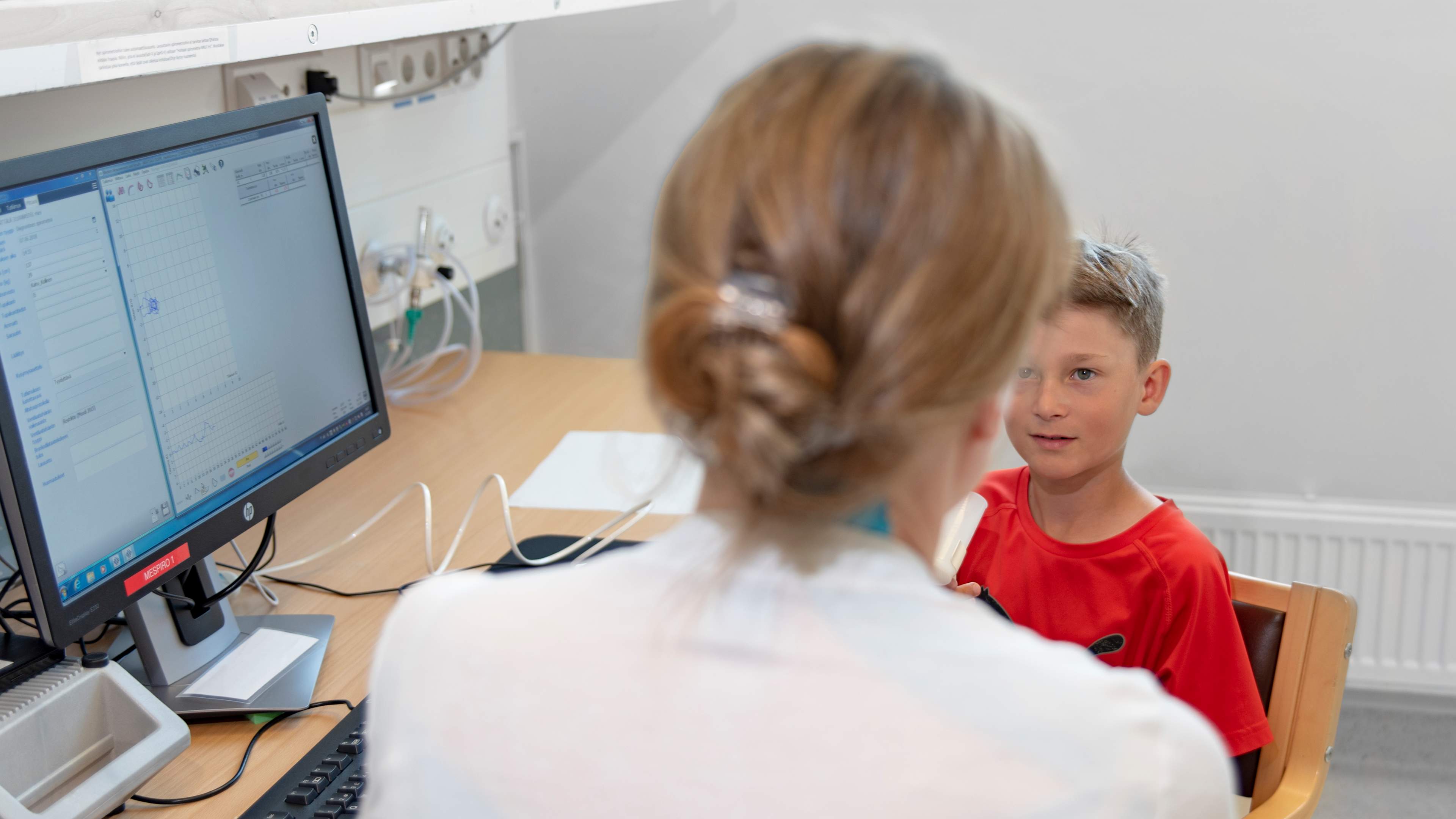
During the EEG examination, both brain electrical activity and video footage are recorded simultaneously. The child may also be tested during possible seizure symptoms. A parent or another trusted adult may accompany the child during the examination. If the seizure symptoms and EEG findings do not clearly confirm whether the episodes are epileptic seizures, and the symptoms occur relatively frequently, a longer video EEG may be performed instead of a standard EEG. EEG examinations are performed for children of all ages.
Non-epileptic seizure-like symptoms include, for example, habitual movements (tic symptoms), so-called breath-holding spells, night terrors, and fainting.
Many children also undergo brain magnetic resonance imaging (MRI) examination. This helps to clarify the type of epilepsy and whether there is an identifiable underlying cause.
Imaging may reveal structural abnormalities in the brain, such as cortical developmental disorders, signs of a past cerebrovascular event, infection, or other injury.
In many children with epilepsy, brain structures appear completely normal.
Watch the video: EEG examination for a child. The video was produced by Tyks and includes Finnish subtitles.