Go to page content

Overnight and Sleep polygraphy examination

Sleep and alertness-related examinations can be used to examine sleep-related breathing disorders, abnormal daytime sleepiness, or a broader range of sleep disturbances.

The most common sleep and alertness-related examinations are: 

  • Overnight polygraphy, i.e. nocturnal breathing disorder examination 

  • Sleep polygraphy 

Overnight polygraphy is a method to assess how breathing functions during sleep. Sleep polygraphy, on the other hand, is used to examine various sleep disorders. Both tests can be conducted either at home or in a hospital. 

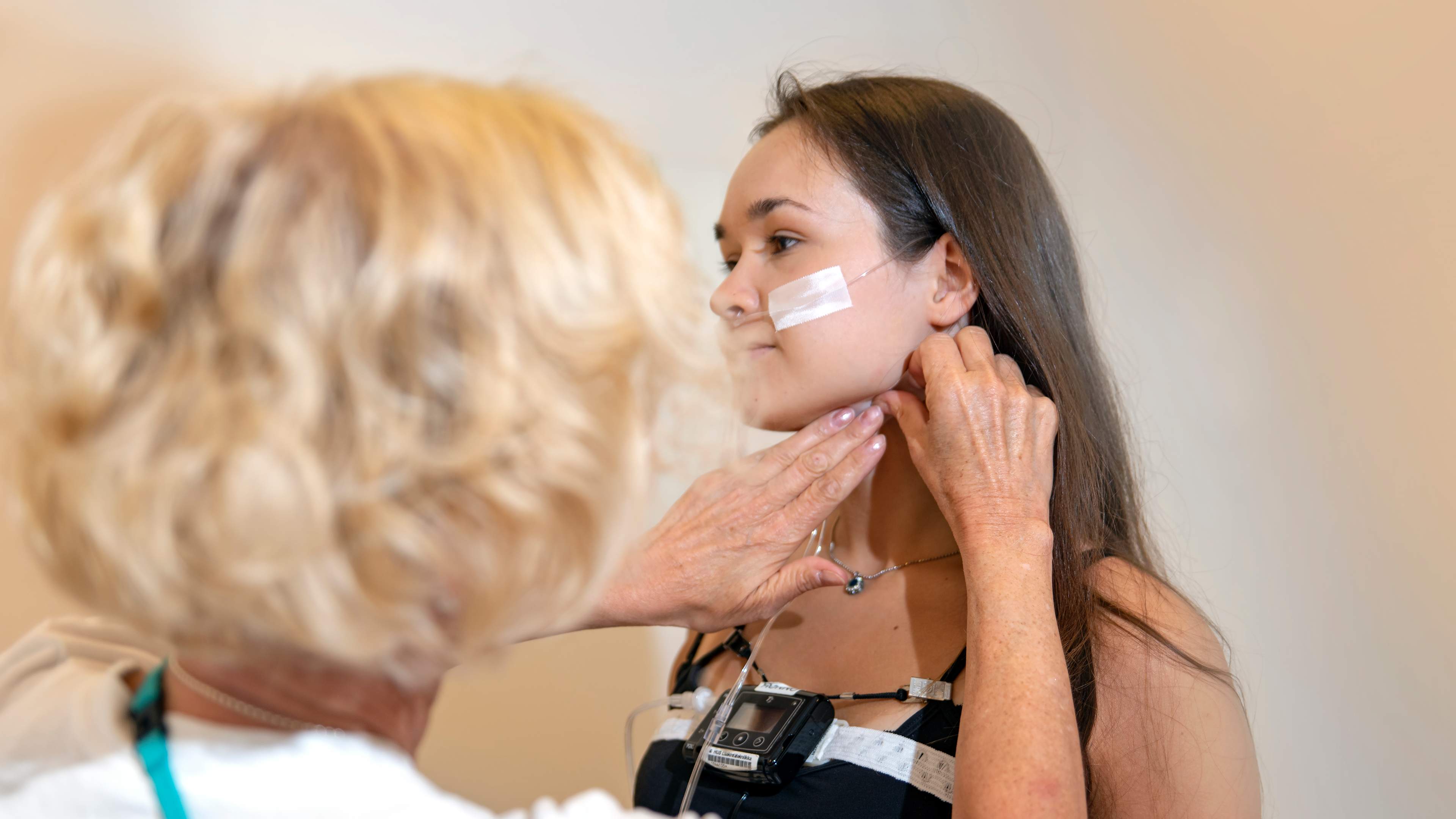
Overnight polygraphy refers to a examination conducted during the night, where sleep-related breathing and leg movements can be measured. The examination is typically performed at home. 

Overnight polygraphy is used to examine sleep-related breathing disorders, i.e. how breathing functions during sleep. The physician may suspect sleep apnea or wish to examine the causes of pronounced daytime fatigue. In addition to sleep apnea, overnight polygraphy can also be used to examine restless legs syndrome. 

Overnight polygraphy device at home 

The examination uses a device that you will use overnight. You must collect the device in advance from a designated location. 

Staff will instruct you on how to use the device and provide written instructions to take home. The return of the device will also be scheduled. To ensure the success of the examination, it is important that you read and follow the instructions carefully. 

In the evening, you will put on the device before going to bed and sleep with it as usual. Some sensors may be attached already when you collect the device. 

Sensors and measurements 

The overnight polygraphy device includes various sensors that measure airflow through the nose and mouth, respiratory movements of the chest and diaphragm, heart rate, snoring, sleeping position and leg movements. 

The examination is painless and safe. However, there is a risk that the device may not be properly fitted at home or that some sensors may detach during the night, which could result in incomplete data. 

Important follow-up care 

Based on the measurement results, the physician will prepare a report. The physician who referred you for the examination will inform you of the results and how treatment will proceed. Contact the care unit if you do not have a scheduled appointment or call time. 

Please remember that the examination itself does not resolve symptoms. After the examination, you may need to commit to the treatment instructions provided by your physician (e.g. CPAP therapy, weight loss). 

Watch the video: Overnight polygraphy. Produced by HUS, with subtitles in Finnish, Swedish, and English.

Watch the video: Limited overnight recording at home. Produced by HUS, with subtitles in Finnish, Swedish, and English.

Comprehensive sleep polygraphy is used to examine various sleep disorders. These include sleep-related breathing disorders, periodic limb movement disorder, REM sleep behavior disorder, disturbed perception of sleep duration and hypersomnia disorders such as narcolepsy and idiopathic hypersomnia. 

The examination is performed either at home or in the hospital’s clinical neurophysiology department. If done at home, the device is attached at the clinical neurophysiology unit before the examination night. You will also receive instructions and written guidance to take home. 

Comprehensive data via monitoring 

Before the examination, you will receive preparation instructions from your treating physician and the examination unit. For example, some medications affect sleep architecture, so gradual discontinuation before the examination may be necessary. 

Sleep polygraphy measures EEG i.e. brain’s electrical activity, eye movements, muscle tone, airflow, respiratory movements of the chest and diaphragm, blood oxygen saturation, heart rate, snoring, sleeping position and leg movements. 

Based on the relative proportions of sleep stages, number of awakenings, and sleep cycles, information about sleep quality is also obtained. 

The examination is painless and the device does not significantly disturb sleep. EEG sensors are attached to the scalp using a water-soluble adhesive, which may leave some residue in the hair after the examination. The adhesive will come off during the next hair wash. 

The physician who referred you for the examination will inform you of the results and how treatment will proceed. Contact the care unit if you do not have a scheduled appointment or call time. 

Is your child undergoing comprehensive sleep polygraphy? 

This video explains from a child’s perspective what comprehensive sleep polygraphy involves, how the examination proceeds, and what happens during it. The video was filmed at HUS New Children’s Hospital in Helsinki. In addition to the video, always review the patient instructions you receive. 

Watch the video: Comprehensive sleep polygraphy for children. Produced by HUS, with subtitles in Finnish, Swedish, and English.


Updated 13.11.2025