

Go to page content

Lung function examinations

Lung function can be assessed using examinations as spirometry, oscillometry, diffusing capacity, and nitric oxide test.

Spirometry is a examination that measures the ventilatory function of the lungs. For small children, oscillometry is typically used to assess lung function. The diffusing capacity test evaluates the efficiency of gas exchange between the alveoli and the pulmonary circulation. The nitric oxide test measures the concentration of nitric oxide in exhaled air. 

The physician who referred you for the examination will inform you of the results and how treatment will proceed. If you do not have an appointment or scheduled call, please contact your care unit. 

Spirometry is used to examinate conditions such as: 

  • Asthma 

  • Chronic obstructive pulmonary disease (COPD) 

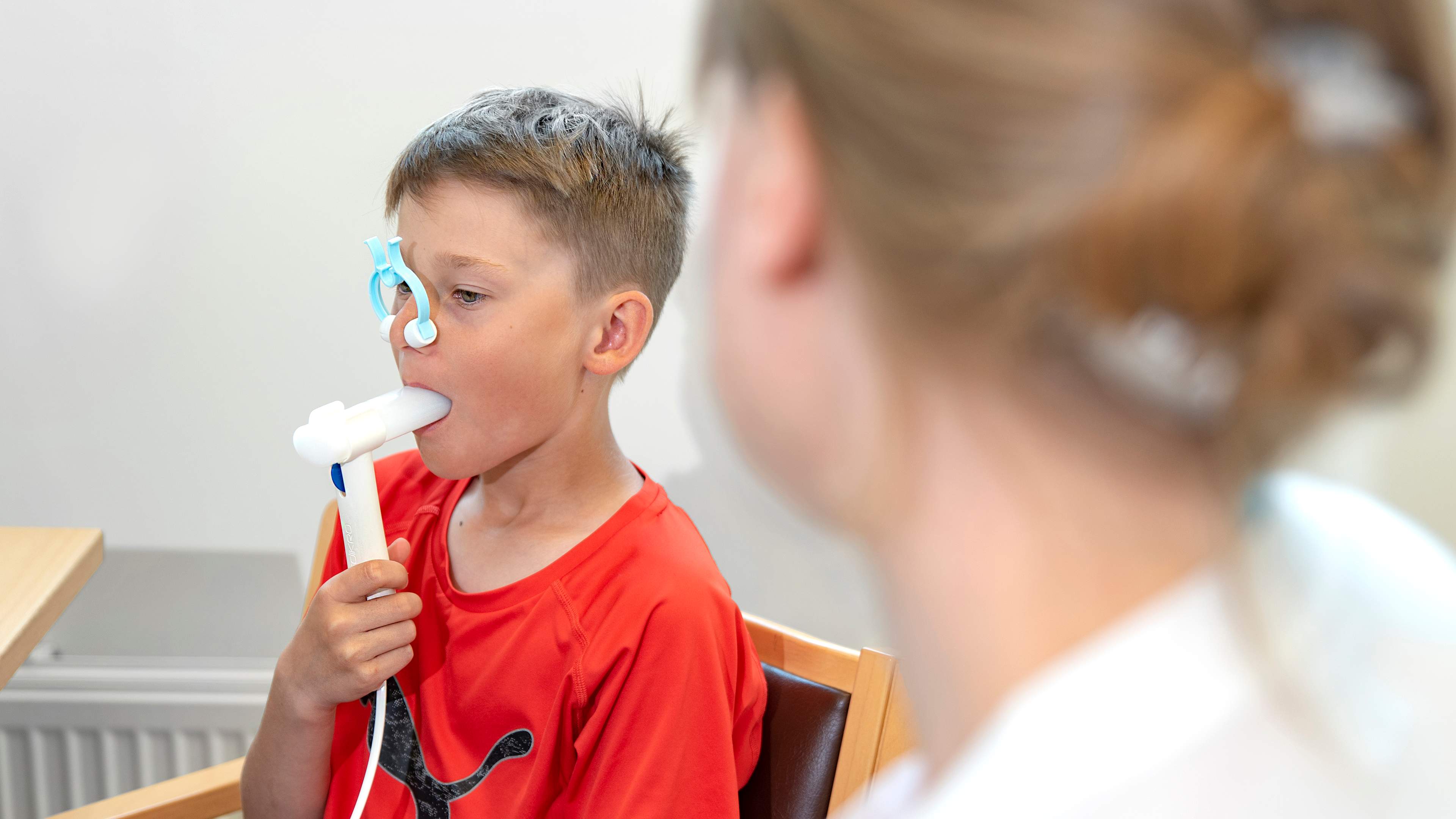
During the examination, you blow into a device (spirometer) that measures lung volume and airflow rate. It shows how much air your lungs can hold at once (volume) and how quickly you can empty or fill your lungs (flow). 

It is often important to consider medication affecting the bronchial tubes before spirometry—whether a pause in medication is needed prior to the examination. You will receive specific instructions from the referring unit. The examination is not performed during or immediately after a respiratory infection. 

Bronchodilation examination 

If necessary, a bronchodilation examination is performed, where the patient is given a bronchodilator medication and then spirometry is repeated. This examination assesses the effect of the medication on lung function. 

The physician draws conclusions about lung function based on the examination results. 

In preschool-aged children (over 2–3 years), lung function and asthma are assessed using oscillometry. The child places a mouthpiece between the teeth and breathes normally through it. 

The device measures lung function using pressure wave oscillations. A light nose clip is applied so that breathing occurs only through the mouthpiece. Oscillometry is less dependent on blowing force and technique than spirometry. 

If needed, an exercise oscillometry examination can be performed to assess the effect of physical exertion on lung function. If the diagnosis remains unclear after basic examinations, methacholine challenge testing may be used to examine bronchial hyperresponsiveness. 

The physician draws conclusions about lung function based on the examination results. 

This examination measures the efficiency of gas exchange between the alveoli and the pulmonary circulation. During the examination, the patient inhales a test gas through a mouthpiece, holds their breath for about ten seconds, and then exhales. The concentrations of gases in the exhaled air are measured. 

The physician draws conclusions about lung function based on the examination results. 

This examination measures the concentration of nitric oxide in exhaled air. The patient empties their lungs, places a mouthpiece in their mouth, inhales fully, and exhales steadily. Exhaled air always contains small amounts of nitric oxide, but in inflammatory lung diseases such as asthma, the levels are significantly elevated. 

The physician draws conclusions about lung function based on the examination results. 

Updated 13.11.2025