

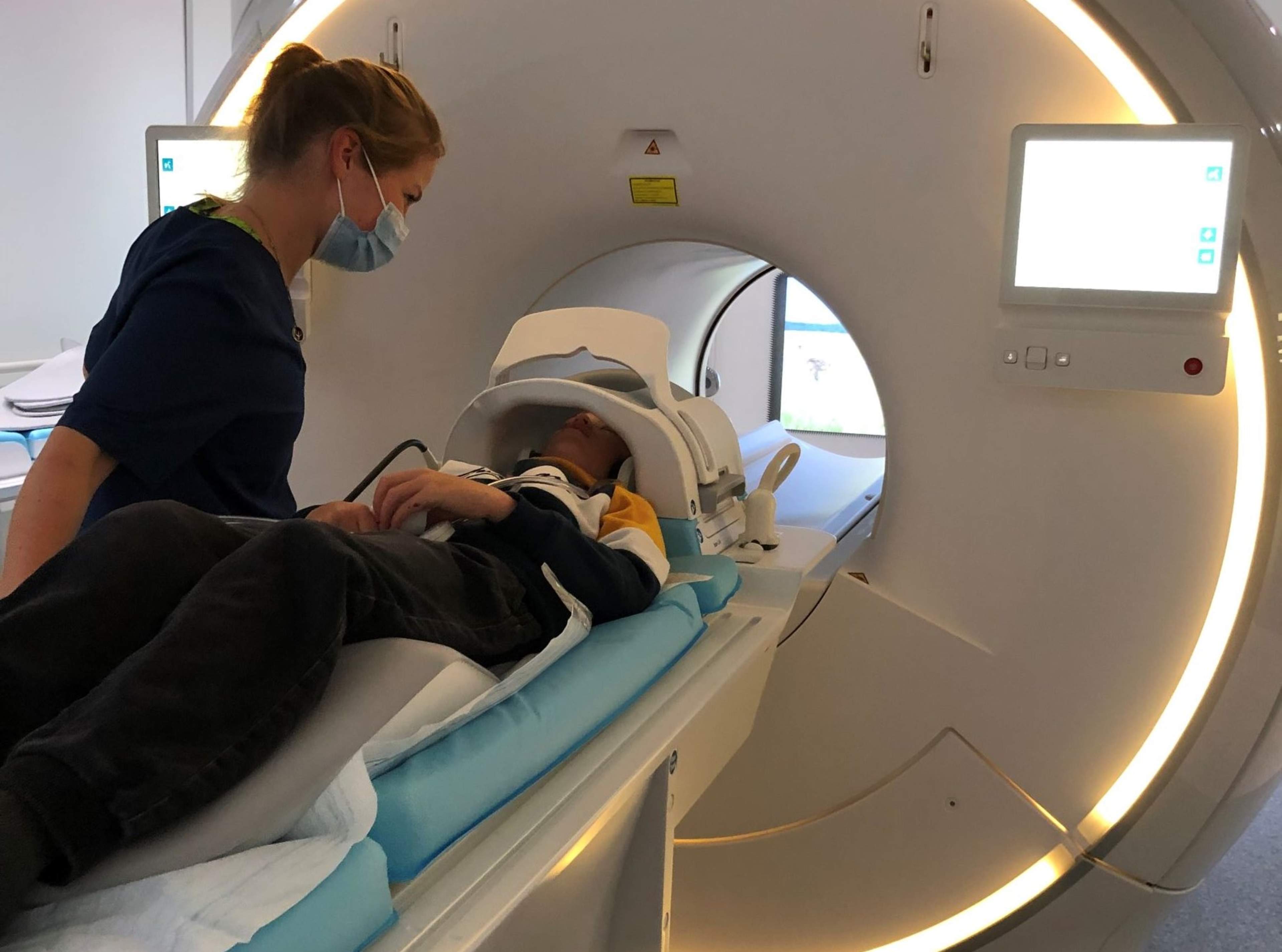
Imaging for children includes, for example, X-ray, ultrasound, MRI, EEG, ECG, and sleep examinations, as well as isotope and fluoroscopy examinations. The aim is to use the lowest possible radiation dose while still achieving sufficient image quality for diagnosis.
Some longer imaging examinations, such as MRI, are done under anesthesia for very young children. In certain neurophysiological examinations (for example EEG), it is important to perform the examination during natural sleep.
A parent or another adult should be present with the child, who may be asked to assist during the imaging examination. The assisting person or anyone present in the imaging room cannot be pregnant. The child must remain still for the duration of the examination, which can range from a few seconds to a relatively long period (for example, an MRI scan may last from 20 minutes to an hour).