

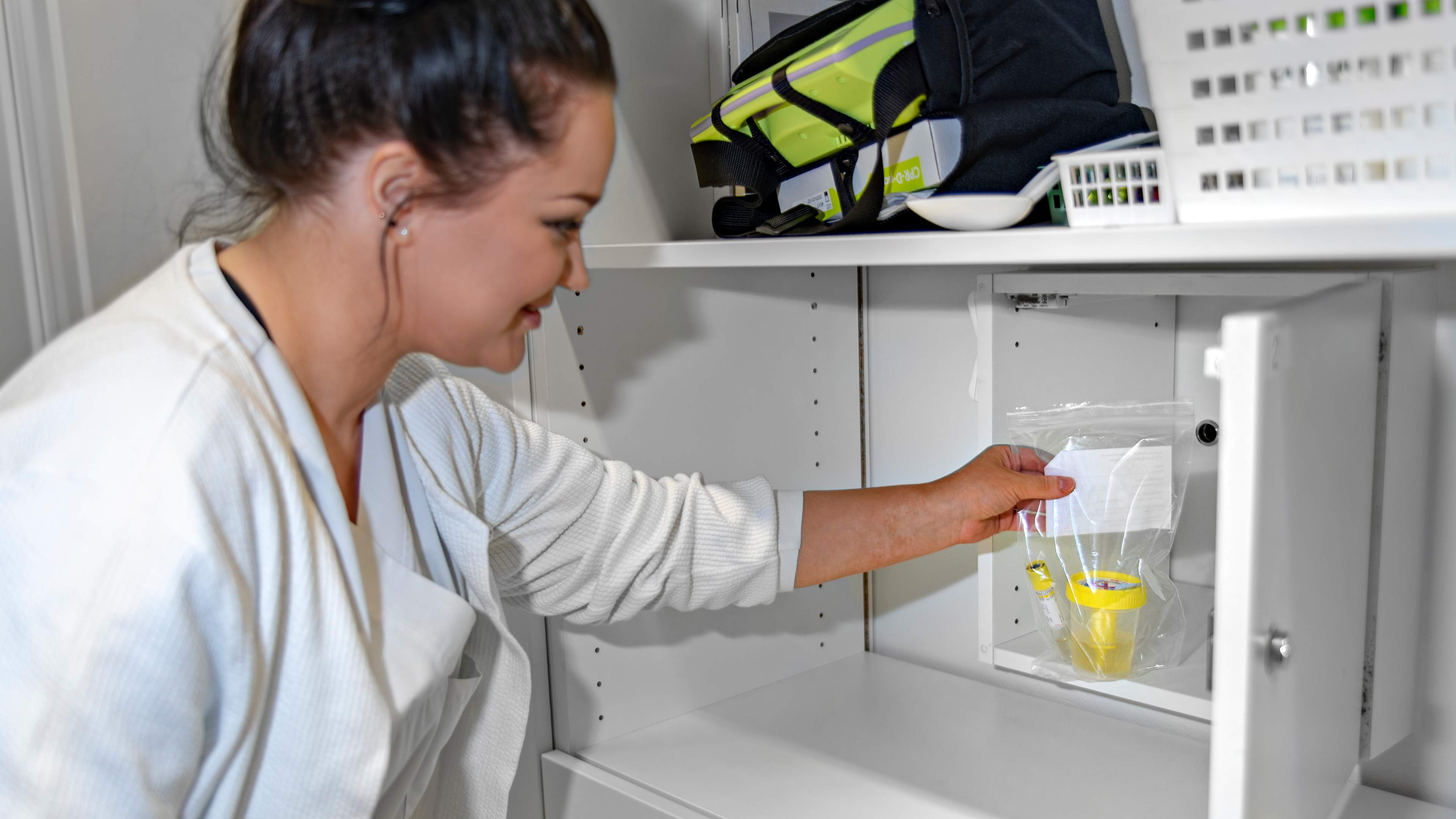
In most cases, a urine sample can be collected at home by following verbal and written instructions and then delivered to the laboratory for examination according to the given instructions.
Urine samples
Urine samples are most commonly used to examine the condition of the kidneys, urinary tract, and bladder. They are also used in the examinations of systemic diseases not limited to the kidneys.
Important
Proper preparation according to instructions is a crucial part of obtaining reliable laboratory results. Please inform the sample collector if you have not followed the instructions.
Check the patient instructions you received to see how to prepare for the examination. It is important to follow the instructions carefully when giving a urine sample to ensure the sample is representative.
The first morning urine or urine that has remained in the bladder for at least four hours is often the most suitable for testing. This allows the substances being examined to concentrate in the urine, resulting in more reliable examination results. Some examinations specifically require the first morning urine—check your patient instructions for details.
Certain urine examinatios require timed collection (i.e. 24-hour collection), during which all urine is collected. You will receive separate instructions and supplies for these examinations. If you have received supplies and instructions from the laboratory for home collection, be prepared to report both the time of collection and the bladder retention time when bringing the sample to the laboratory.
When giving a urine sample for bacterial culture, it is essential to perform thorough genital cleansing. Otherwise, bacteria from the skin and mucosa can grow heavily on the culture plate, which may mask the actual urinary tract infection pathogen due to the mixed growth.
Adults are usually asked to provide a midstream urine sample, which is collected from the middle portion of the urine stream after cleansing. A urine sample is always collected into a specimen container provided by the laboratory or the healthcare unit. Different types of specimen containers and sample tubes are used for different tests.
For small children, urine samples may sometimes be collected using a urine collection bag or absorbent pad. You will always receive specific instructions and supplies from the laboratory for these methods.
Timed urine samples are collected at home, typically over a 24-hour period. All urine excreted during the specified time is collected into a container provided by the laboratory.
You will always receive specific instructions and supplies from the laboratory for different types of urine sample collection.
Watch the video: Urine sample collection – women, midstream sample. This video guide for girls and women has been produced by HUS in collaboration with Metropolia University of Applied Sciences and includes Finnish subtitles.
Watch the video: Urine sample collection – men, midstream sample. This video guide for boys and men has been produced by HUS in collaboration with Metropolia University of Applied Sciences and includes Finnish subtitles.
If the sample was collected at home, it must be stored and delivered to the laboratory according to instructions. Always follow the instructions provided by your laboratory regarding urine sample storage.
Giving a urine sample does not require follow-up and does not restrict normal daily activities. Your attending physician will inform you of the results and how treatment will proceed. Contact your care unit if you do not have a scheduled appointment or call time.
There are no risks associated with giving a urine sample.
How do I prepare for urine sample collection?
Check the patient instructions you received to see how to prepare for the examination. It is important to follow the instructions carefully when giving a urine sample to ensure the sample is representative.
The first morning urine or urine that has remained in the bladder for at least four hours is often the most suitable for testing. This allows the substances being examined to concentrate in the urine, resulting in more reliable examination results. Some examinations specifically require the first morning urine—check your patient instructions for details.
Certain urine examinatios require timed collection (i.e. 24-hour collection), during which all urine is collected. You will receive separate instructions and supplies for these examinations. If you have received supplies and instructions from the laboratory for home collection, be prepared to report both the time of collection and the bladder retention time when bringing the sample to the laboratory.
When giving a urine sample for bacterial culture, it is essential to perform thorough genital cleansing. Otherwise, bacteria from the skin and mucosa can grow heavily on the culture plate, which may mask the actual urinary tract infection pathogen due to the mixed growth.
How do I give a urine sample?
Adults are usually asked to provide a midstream urine sample, which is collected from the middle portion of the urine stream after cleansing. A urine sample is always collected into a specimen container provided by the laboratory or the healthcare unit. Different types of specimen containers and sample tubes are used for different tests.
For small children, urine samples may sometimes be collected using a urine collection bag or absorbent pad. You will always receive specific instructions and supplies from the laboratory for these methods.
Timed urine samples are collected at home, typically over a 24-hour period. All urine excreted during the specified time is collected into a container provided by the laboratory.
You will always receive specific instructions and supplies from the laboratory for different types of urine sample collection.
Watch the video: Urine sample collection – women, midstream sample. This video guide for girls and women has been produced by HUS in collaboration with Metropolia University of Applied Sciences and includes Finnish subtitles.
Watch the video: Urine sample collection – men, midstream sample. This video guide for boys and men has been produced by HUS in collaboration with Metropolia University of Applied Sciences and includes Finnish subtitles.
What should I be aware of after giving a urine sample?
If the sample was collected at home, it must be stored and delivered to the laboratory according to instructions. Always follow the instructions provided by your laboratory regarding urine sample storage.
Giving a urine sample does not require follow-up and does not restrict normal daily activities. Your attending physician will inform you of the results and how treatment will proceed. Contact your care unit if you do not have a scheduled appointment or call time.
Are there any risks associated with giving a urine sample?
There are no risks associated with giving a urine sample.
Related to topic
Updated 21.10.2025