

PET-CT examination of cardiac metabolism is used to diagnose and monitor inflammatory heart diseases. It allows for highly precise detection of changes in inflammatory processes.
PET-CT examination of cardiac metabolism
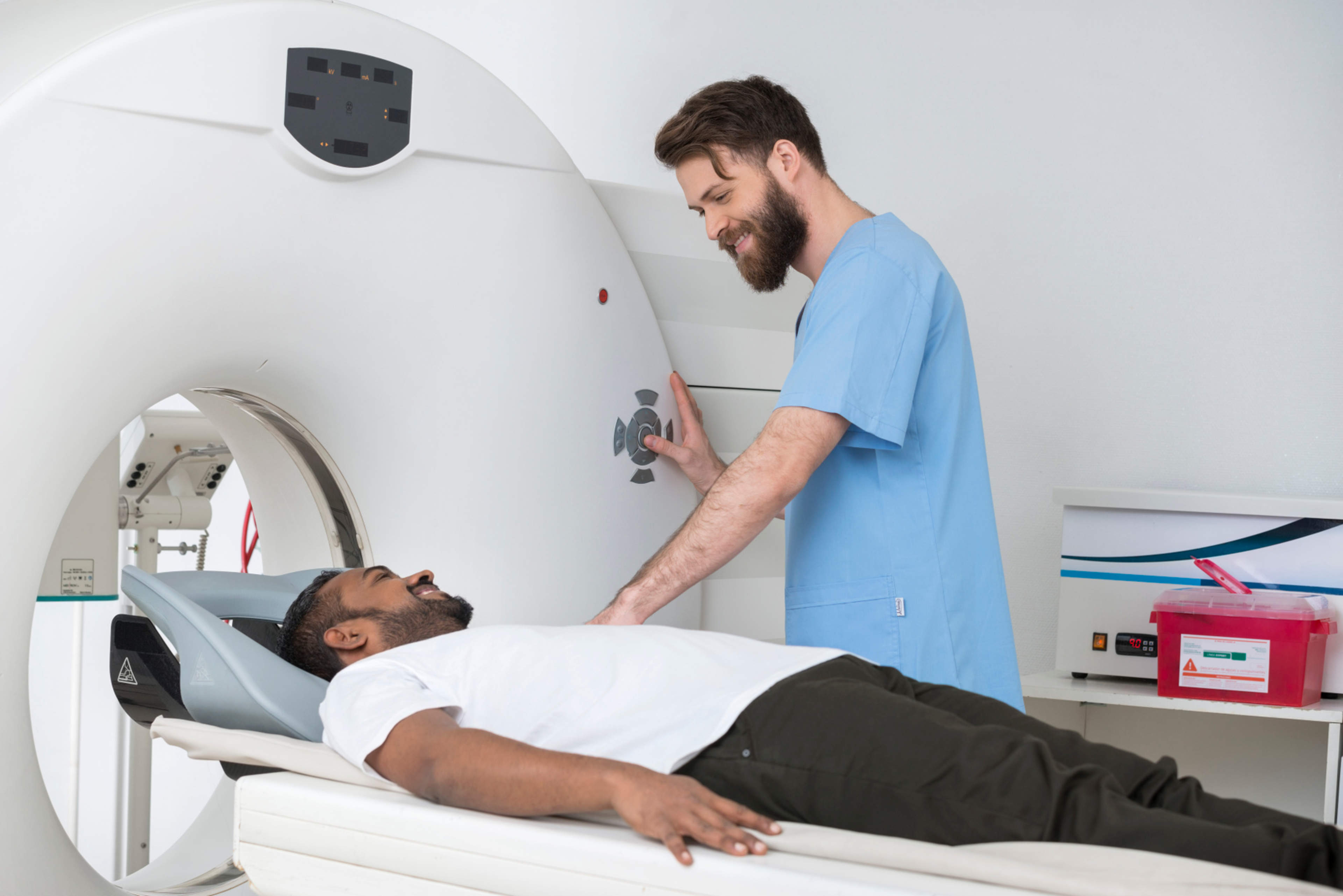
A PET-CT of cardiac metabolism examines the heart’s metabolic activity using isotopes and a computed tomography (CT) scanner.
Important
Details of the examination may vary between units. Always read the patient instructions you receive well in advance of the examination.
You will receive detailed instructions in advance on how to prepare. Proper preparation is essential for the success of the examination.
You will be given dietary and fasting instructions to suppress the normal glucose metabolism of the heart muscle. Before the examination, you must refrain from eating and drinking and avoid physical exertion. For diabetic patients, blood glucose levels should be as close to normal as possible before the examination.
If you know or suspect that you are pregnant, inform your treating physician or contact the imaging unit well in advance.
You will first be given an intravenous injection of radioactive glucose, known as fluorodeoxyglucose. This radioactive glucose accumulates in tissues with increased metabolic activity, such as inflamed heart muscle.
You will rest in bed both before and after the injection. Resting helps reduce muscle tension and stabilize metabolism, allowing the glucose-containing tracer to better target the areas of interest.
After resting, a low-dose CT imaging is performed to obtain a detailed structural image of the heart. This is followed by a PET imaging (positron emission tomography), which detects the distribution of the tracer in the heart. Finally, the CT and PET images are combined by computer to provide precise information about any inflammation in the heart and its location.
The entire examination takes approximately 3 hours.
After the examination, it is advisable to drink more fluids than usual and urinate frequently, as the radioactive tracer is excreted through urine. On the day of the examination, avoid close contact with pregnant individuals and refrain from holding children in your lap or keeping them close.
Breastfeeding mothers must pause breastfeeding after the scan. Any milk expressed during this time should be discarded. The healthcare staff will provide detailed instructions to breastfeeding mothers after the examination.
A radiologist will review the images and provide a report. The physician who referred you for the examination will inform you of the results and the next steps in your care. If you do not have a scheduled appointment or call time, contact your care unit.
The PET-CT examination is painless.
The amount of radiation exposure depends on the extent of the examination. The equipment used is highly sensitive and can detect very small amounts of radiation, meaning the potential risk from radiation is low. Allergic reactions during a cardiac metabolic PET-CT examination are very rare.
If you have concerns about radiation, you can always ask your treating physician or the radiology staff for more information. You can also find information about radiation exposure and the radiation doses of different examinations in our Information about radiation section.
How do I prepare for a PET-CT examination of cardiac metabolism?
You will receive detailed instructions in advance on how to prepare. Proper preparation is essential for the success of the examination.
You will be given dietary and fasting instructions to suppress the normal glucose metabolism of the heart muscle. Before the examination, you must refrain from eating and drinking and avoid physical exertion. For diabetic patients, blood glucose levels should be as close to normal as possible before the examination.
If you know or suspect that you are pregnant, inform your treating physician or contact the imaging unit well in advance.
What Happens During the PET-CT examination of cardiac metabolism?
You will first be given an intravenous injection of radioactive glucose, known as fluorodeoxyglucose. This radioactive glucose accumulates in tissues with increased metabolic activity, such as inflamed heart muscle.
You will rest in bed both before and after the injection. Resting helps reduce muscle tension and stabilize metabolism, allowing the glucose-containing tracer to better target the areas of interest.
After resting, a low-dose CT imaging is performed to obtain a detailed structural image of the heart. This is followed by a PET imaging (positron emission tomography), which detects the distribution of the tracer in the heart. Finally, the CT and PET images are combined by computer to provide precise information about any inflammation in the heart and its location.
The entire examination takes approximately 3 hours.
What should I be aware of after the PET-CT examination of cardiac metabolism?
After the examination, it is advisable to drink more fluids than usual and urinate frequently, as the radioactive tracer is excreted through urine. On the day of the examination, avoid close contact with pregnant individuals and refrain from holding children in your lap or keeping them close.
Breastfeeding mothers must pause breastfeeding after the scan. Any milk expressed during this time should be discarded. The healthcare staff will provide detailed instructions to breastfeeding mothers after the examination.
A radiologist will review the images and provide a report. The physician who referred you for the examination will inform you of the results and the next steps in your care. If you do not have a scheduled appointment or call time, contact your care unit.
Are there any risks associated with the PET-CT examination of cardiac metabolism?
The PET-CT examination is painless.
The amount of radiation exposure depends on the extent of the examination. The equipment used is highly sensitive and can detect very small amounts of radiation, meaning the potential risk from radiation is low. Allergic reactions during a cardiac metabolic PET-CT examination are very rare.
If you have concerns about radiation, you can always ask your treating physician or the radiology staff for more information. You can also find information about radiation exposure and the radiation doses of different examinations in our Information about radiation section.
Related to topic
Updated 5.11.2025