

Go to page content

Muscle and nerve examination ENMG

ENMG (electroneuromyography), also known as a muscle and nerve examination, is used to examine various types of muscle and nerve damage and disorders.

Common reasons for referral include numbness, loss of sensation, pain, and muscle weakness. ENMG is used to determine whether there are any injuries or functional disorders in the nerves or muscles. In addition to locating the disorder, it provides information about the age, severity, and specific type of the damage. Knowing the type of damage helps in assessing the prognosis.  

Typical reasons for ENMG examination include: 

  • Nerve entrapments, such as median nerve compression at the wrist i.e. carpal tunnel syndrome 

  • Nerve root damage caused by spinal disorders (i.e. herniated disc leading to radiating leg pain, i.e. sciatica) 

  • Nerve injuries related to trauma 

ENMG is also referred to as a nerve conduction examination or nerve and muscle electrical examination. The examination is performed in a clinical neurophysiology unit. 

You may eat, drink, and take your medications as usual before the examination, unless otherwise instructed by the referring physician. It is recommended to wash thoroughly the evening before and avoid applying lotion to the skin afterward. The examination is more successful when the skin in the examined area is clean and free of oils. 

Dress warmly when coming to the examination, as the limbs need to be at normal temperature for accurate measurements. If the back or lower limbs are to be examined, wear short or legless underwear underneath, as long trousers must be removed during the examination. The key is to ensure the examined area can be easily exposed. 

You will receive a symptom chart with your appointment letter or at registration, where you can illustrate your symptoms by drawing and coloring on body diagrams. This helps the physician prepare for the examination. 

If you are taking blood-thinning medication, inform the staff at the beginning of the examination. Also mention if you have an increased risk of bleeding. 

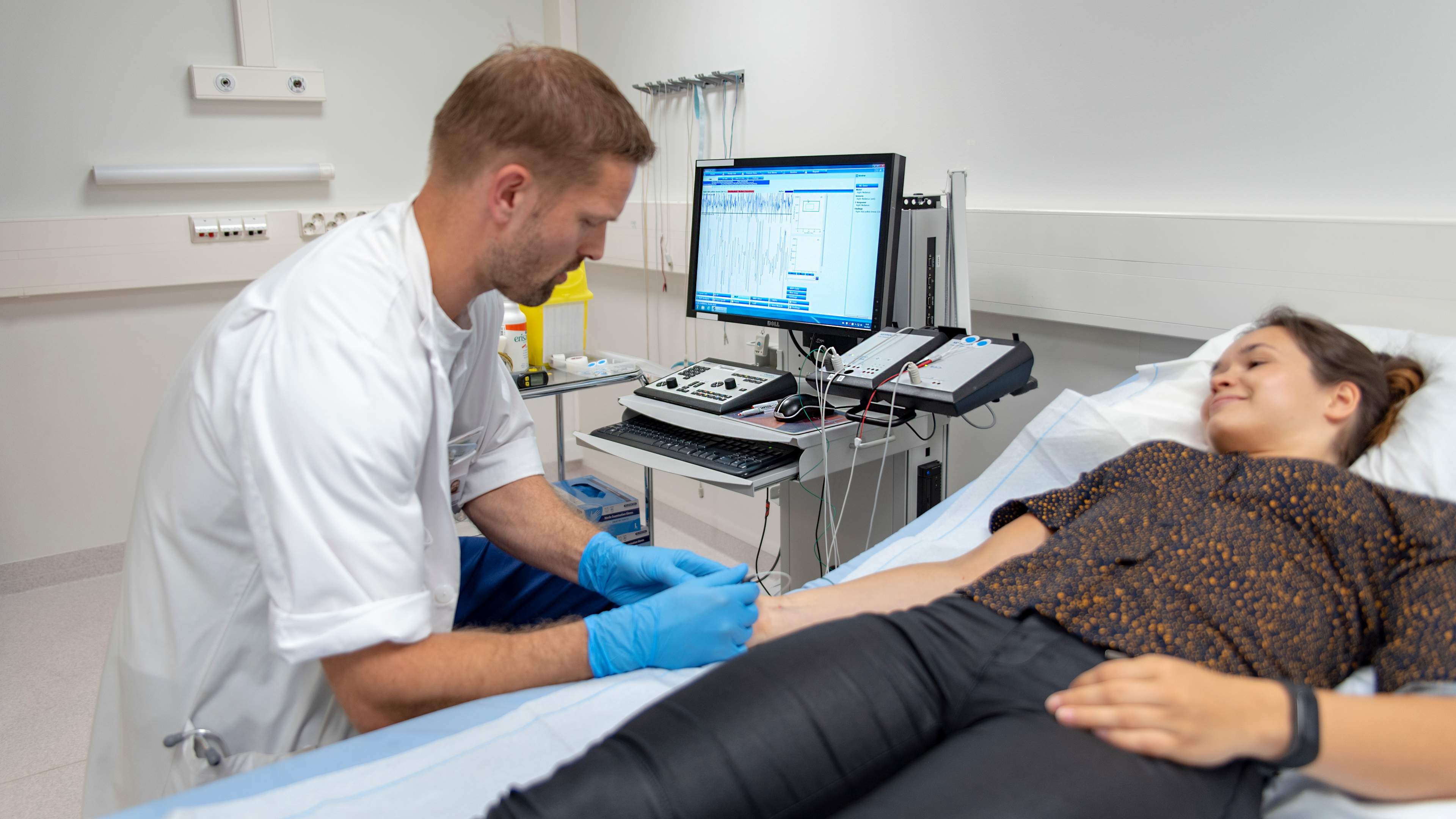
Muscle activity—and indirectly nerve function—is examined by inserting a very thin needle electrode into the muscle. The physician will ask you to contract the muscle at times. Electrical activity is measured both at rest and during contraction. 

When examining peripheral nerve conduction velocities, adhesive electrodes are attached to the skin (i.e. on a finger). Small electrical impulses are delivered to the skin to activate the nerve. The intensity of these impulses depends on the characteristics of the nerve, such as its depth. This part of the examination can be performed not only by a specialist physician but also by a nurse in the clinical neurophysiology unit. 

Needle examination of muscles and electrical impulses may feel unpleasant or even painful for some. Patients have described the needle prick as similar to a mosquito bite, but pain perception is individual. 

ENMG typically lasts between 15 and 60 minutes, depending on how many nerves and muscles are examined. 

No special aftercare is required after examination. A clinical neurophysiology physician will prepare a report based on the measurements. The physician who referred you for the examination will inform you of the results and discuss further treatment. Contact your care unit if you do not have a scheduled follow-up appointment or call. 

The thin needle used in muscle testing may occasionally cause temporary side effects, such as bruising at the puncture site, local inflammation, pain, or minor tissue damage. In rare cases, individuals with chronic pain may experience a temporary increase in their usual pain symptoms for about a day after the examination. 

Updated 13.11.2025