

Go to page content

Electrocardiogram ECG examination

An ECG is used to assess the heart’s electrical activity and symptoms related to heart conditions. It is one of the most commonly performed diagnostic examinations.

ECG (electrocardiography) is a versatile and indispensable method for diagnosing heart diseases and is easy to perform. A resting ECG is always conducted when there is any need to examine the heart. The ECG measures the electrical impulses that regulate the heart’s contractions. No prior preparation is needed for the examination.  ECG recording can be used to examine, among other things: 

  • Arrhythmias, such as extrasystoles and atrial fibrillation 

  • Susceptibility to arrhythmias 

  • Scars from previous myocardial infarctions, bundle branch blocks, and signs of enlargement or strain in different parts of the heart 

  • Acute myocardial infarction 

 Types of ECG examinations include: 

  • Resting ECG 

  • Long-term ECG recording (Holter monitoring) 

  • Symptom-based ECG 

You can find more information about Holter monitoring and symptom-based ECG in the Long-term monitoring section of the Examinationhub. 

No prior preparation is needed for a resting ECG examination. 

It is recommended to sit for 15 minutes before the ECG to allow circulation and heart rate to settle. 

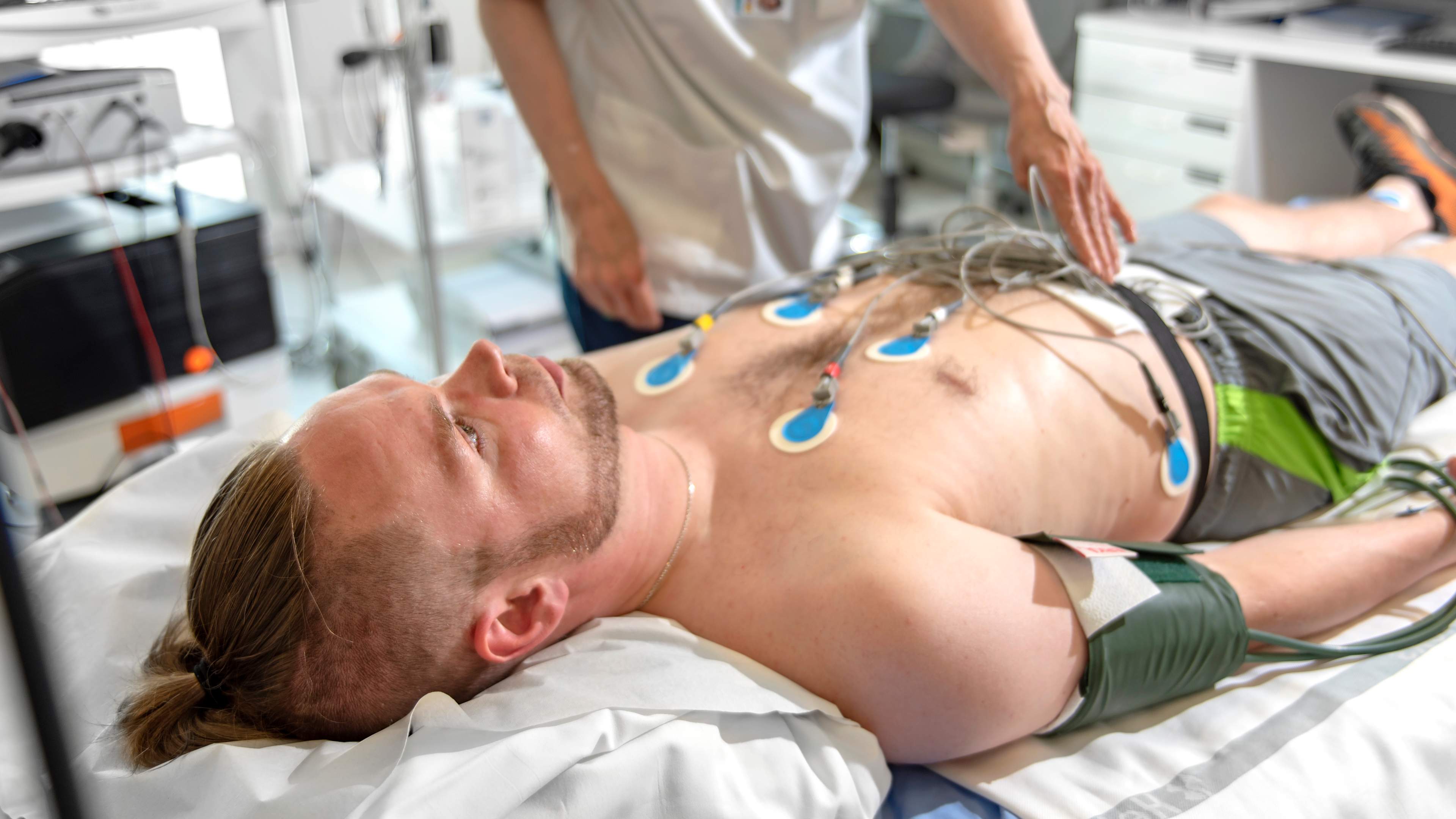
A resting ECG is a widely used examination performed while the patient is at rest. Adhesive electrodes are attached to the skin on the chest, arms, and legs. These electrodes record the ECG trace, which may show changes caused by arrhythmias or other heart conditions. During the examination, you will lie relaxed and still on the examination table. The test takes about 5 minutes and is completely safe and painless. 

The resting ECG does not require follow-up and does not impose any restrictions on normal daily activities. 

The physician who referred you for the examination will inform you of the results and any further treatment. Contact your care unit if you do not have a scheduled appointment or call time. 

The resting ECG examination is completely safe and painless. 

Updated 5.11.2025