

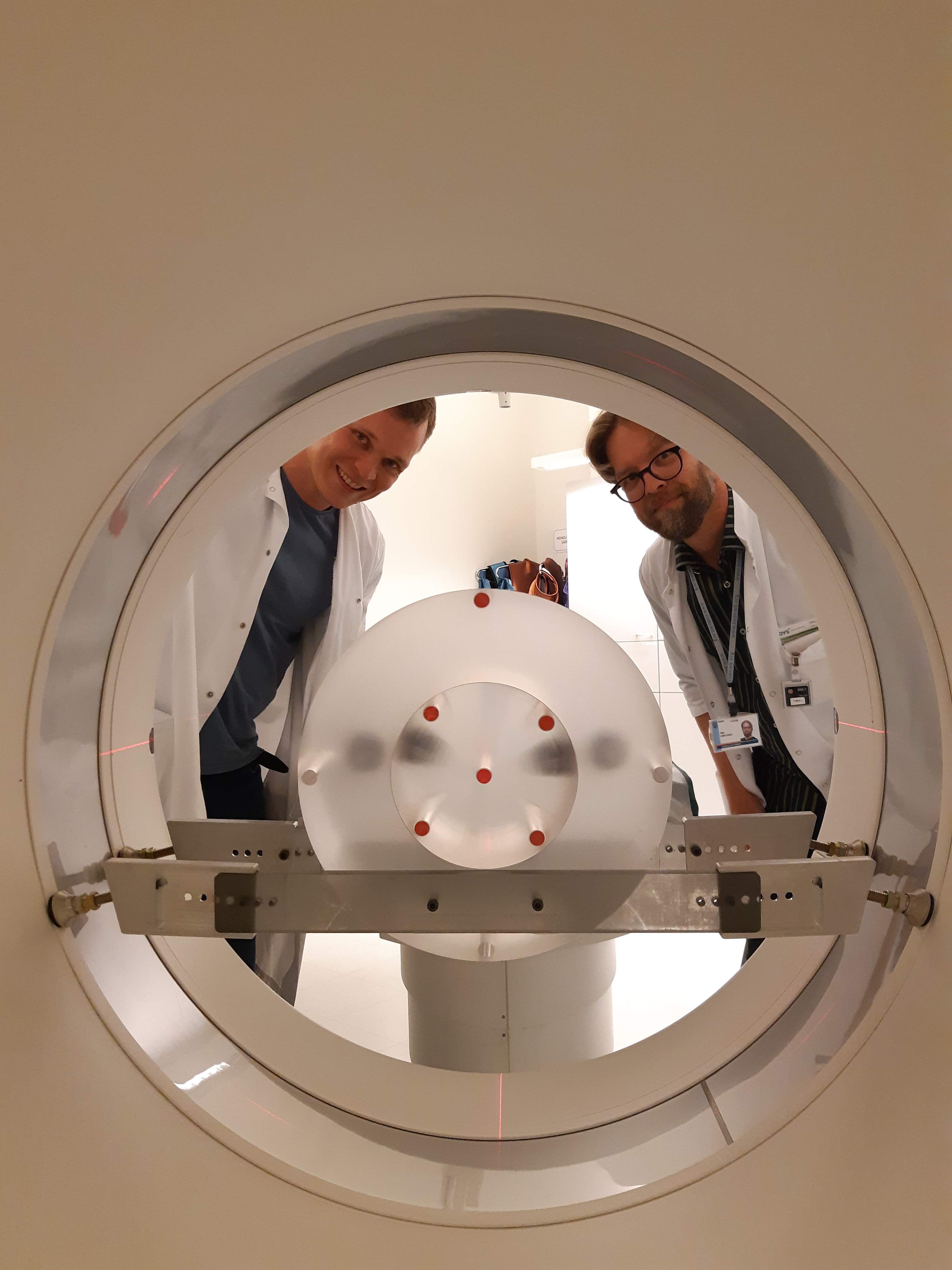
Physicians and professionals performing radiological examinations follow the principles of radiation protection:
Every examination involving ionising radiation is carefully considered to ensure that the expected benefit outweighs the potential harm.
When planning an examination, alternative imaging methods that do not involve radiation (such as ultrasound or MRI) are also considered.
The examination is carried out using the lowest possible radiation dose that still provides sufficient diagnostic information.
In addition, unnecessary repeated examinations, such as fracture follow-up checks, are avoided.
In imaging units, radiation use is monitored by a designated radiation safety organisation and various experts. The Finnish Radiation and Nuclear Safety Authority (STUK) is responsible for nationwide oversight.
Watch the video: The ABC of Radiation Safety – Ensuring Safety in Radiological Examinations. The video is produced by OYS and includes subtitles in Finnish and Swedish.