

Go to page content

Computed Tomography (CT) examination

Computed tomography, or CT, is an imaging examination that uses X-rays to produce detailed images of a specific area of the body.

The examination provides detailed information about body structures such as internal organs, blood vessels, and bones.  

CT is used to examine, among other things: 

  • bone fractures 

  • internal organ injuries 

  • circulatory problems 

  • strokes 

  • cancers 

Other names for computed tomography include slice imaging and computer-assisted tomography.  

A contrast agent administered intravenously may be used during the CT examination to enhance the visibility of blood vessels or to distinguish the intestines. 

Watch the video: Computed Tomography (CT). The video is produced by OYS and includes subtitles in Finnish and Swedish. 

Check the patient instructions you received to see how to prepare for the examination. Some examinations require no special preparation, while others may require fasting. 

Metal or metal parts in the body are not a contraindication for a CT examination. 

A contrast agent containing iodine may be used during the examination. You will be asked about allergies. If you have a known allergy to iodine-based contrast agents, inform the referring physician when scheduling the examination and notify the radiographer when you arrive. 

The contrast agent is eliminated from the body via the kidneys. If kidney function is impaired, elimination may be slower. You may be asked to undergo laboratory examiantions before the CT examination to assess kidney function. 

If you know or suspect that you are pregnant, inform your treating physician or the radiology staff before the examination. 

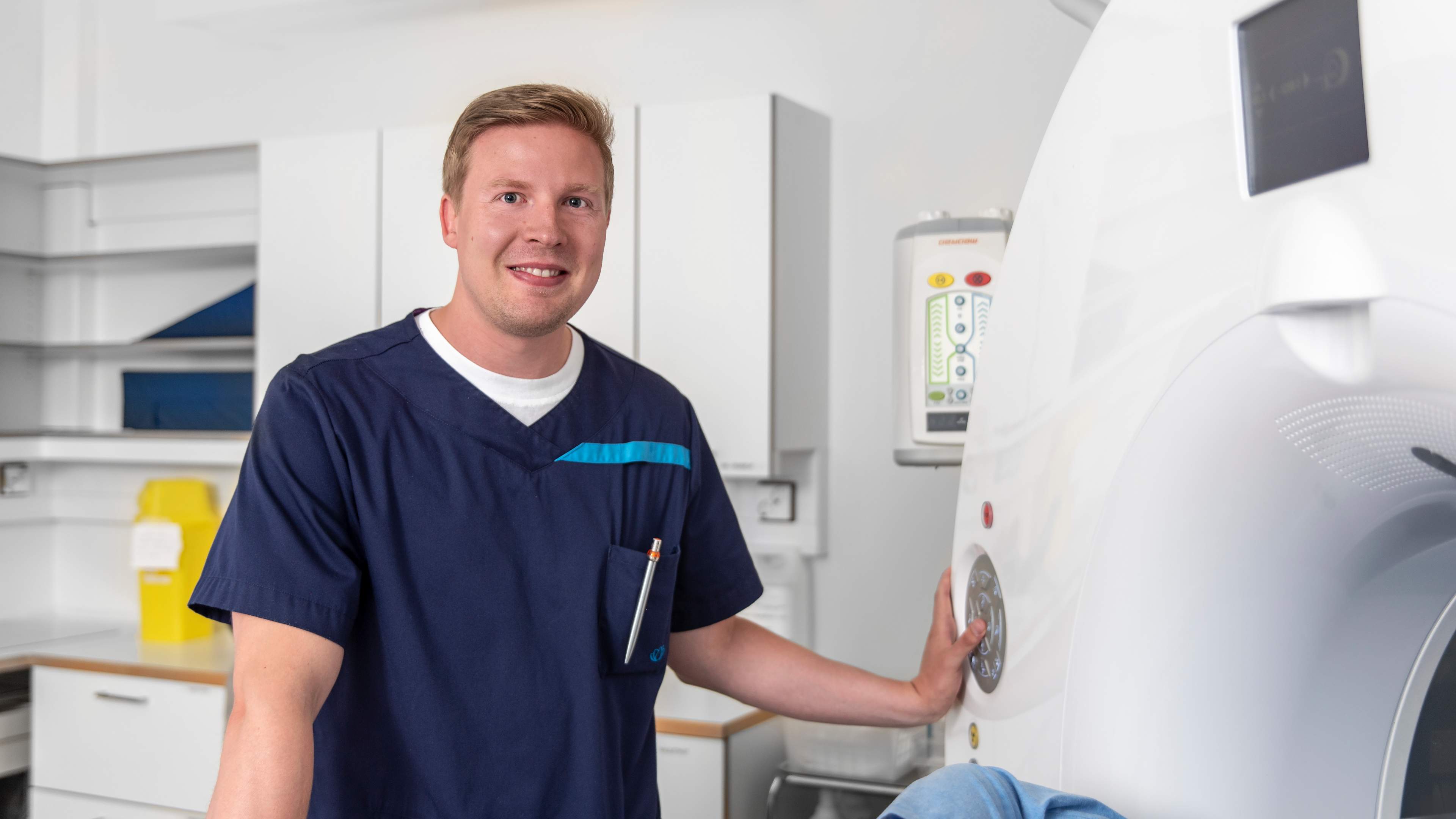
During the imaging, you will lie on your back on a flat examination table. The table moves slowly through a ring-shaped scanner. The scanner is open at both ends, and people with claustrophobia usually do not have difficulty undergoing the imaging. The actual imaging time is short, but preparations may take time, so allow sufficient time for the examination. 

You must remain still during the imaging to ensure image quality. You may be asked to inhale, exhale, or hold your breath at different stages of the imaging. 

If needed, a contrast agent may be used to enhance the visibility of blood vessels or distinguish organs. The contrast agent may be administered intravenously via a cannula or orally (intestinal contrast). Intravenous contrast may cause a temporary sensation of warmth and a metallic taste in the mouth. 

A CT examination usually does not require follow-up and does not restrict normal activities. If contrast agent was used, drink plenty of water after the examination. Water helps eliminate the contrast agent from the body. The contrast agent is typically harmless and is excreted in the urine. 

A radiologist will review and interpret the images and write a report. The physician who referred you for the examination will inform you of the results and discuss further treatment. Contact your care unit if you do not have a scheduled appointment or call time. 

CT is a fast, painless, and safe examination method. If contrast agent is used, there is a small risk of allergic reaction. In such cases, your condition will be monitored for a short time after the imaging. Reactions can be prevented and treated with medication. 

CT uses X-ray radiation. The amount of radiation depends on the scope of the examination. 

The radiation dose and potential risk from CT are small. If you have concerns about radiation, you can ask your treating physician or radiology staff for more information. You can also find information about radiation effects and doses from different examinations in the Information about Radiation section. 

Updated 22.10.2025