

As the illness progresses, a great deal of uncertainty is introduced into life. A person who used to manage their own affairs is forced into a situation in which taking care of matters that were previously taken for granted may become complicated.
Care and nurture in palliative care
Care and nurture refers to supporting the patient’s individual wellbeing in terms of things such as coping at home, assistance with daily activities, and security in knowing that they are being cared for. As the illness progresses, the need for care and nurture increases.
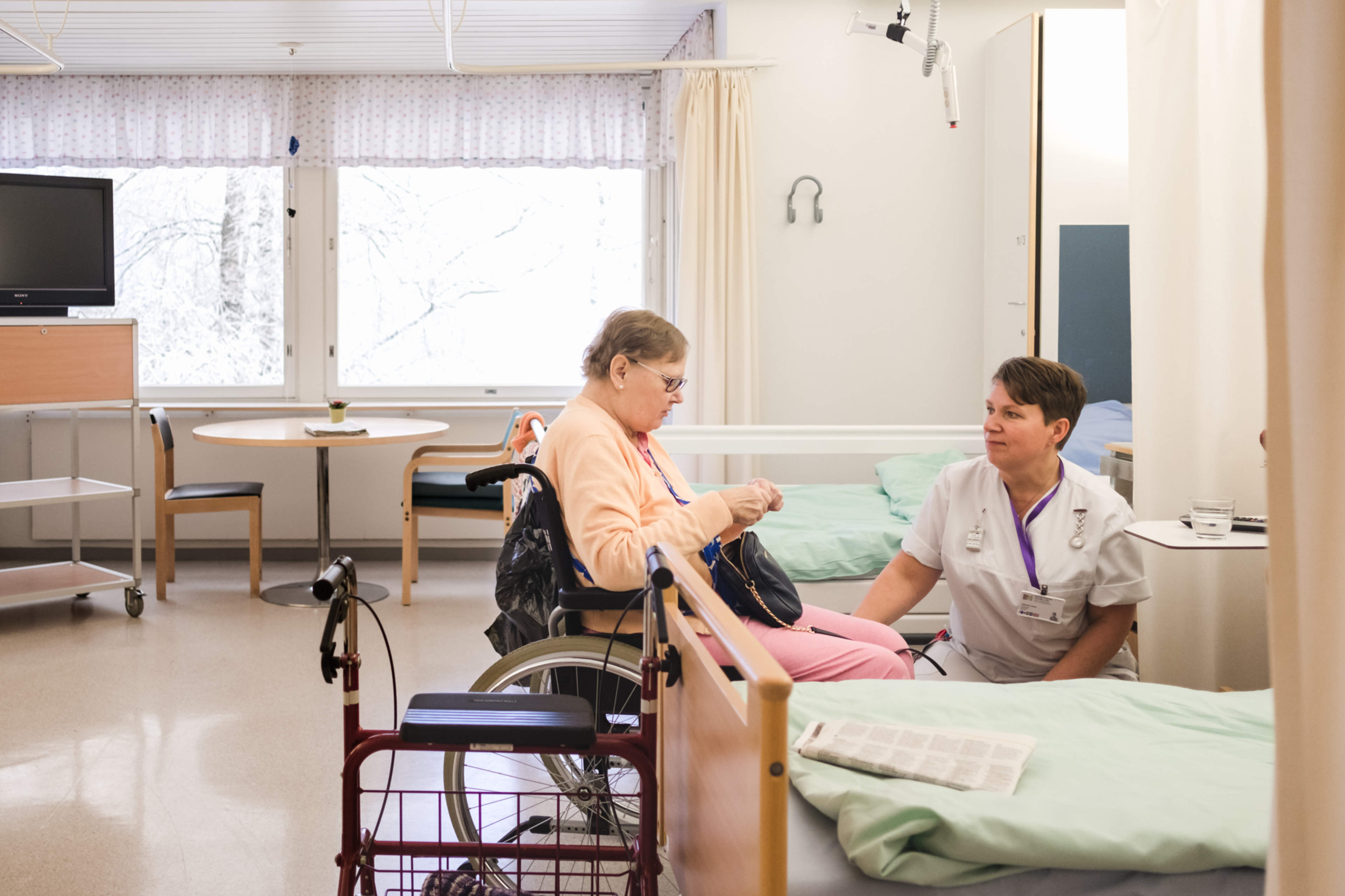
Changes in health may affect matters such as the ability to cope with daily activities or life as a family. Everyday activities such as bathing, getting dressed, running errands outside the home, driving, doing home maintenance, cooking, or going to the toilet may become challenging due to the illness.
Changes in functional capacity and in control over daily life may feel confusing and scary. Raising these issues may be difficult, but giving them thought in advance and planning ahead usually eases the strain on both the patient and those close to them.
Home care is a way to support coping at home. Services available through home care include a variety of assistive devices that can be borrowed (for example walking aids, rails and handles, wheelchairs, hospital beds, shower seats, medical supplies) as well as services related to care and nurture (for example blood tests, wound care, meal and cleaning services, and assistance with bathing or getting dressed). The services required are always assessed on a case-by-case basis.
Palliative care can take place at home for as long as the patient and their family feel good and safe with the arrangement – even until the end of life.
However, in case the patient’s condition deteriorates and the symptoms of their illness get worse, it’s advisable to have a backup plan for where to receive help 24/7, and where the patient’s care would continue in case home care became unfeasible for whatever reason. Discussing these matters well ahead of time with those responsible for the patient’s care is recommended.
The staff members in a nursing home are there to offer support for coping with daily activities according to the patient’s individual needs. The patient’s loved ones can participate in and offer assistance with daily activities according to their wishes, personal resources, and abilities.
Daily activities and functional capacity
Changes in health may affect matters such as the ability to cope with daily activities or life as a family. Everyday activities such as bathing, getting dressed, running errands outside the home, driving, doing home maintenance, cooking, or going to the toilet may become challenging due to the illness.
Changes in functional capacity and in control over daily life may feel confusing and scary. Raising these issues may be difficult, but giving them thought in advance and planning ahead usually eases the strain on both the patient and those close to them.
Home care as support for coping at home
Home care is a way to support coping at home. Services available through home care include a variety of assistive devices that can be borrowed (for example walking aids, rails and handles, wheelchairs, hospital beds, shower seats, medical supplies) as well as services related to care and nurture (for example blood tests, wound care, meal and cleaning services, and assistance with bathing or getting dressed). The services required are always assessed on a case-by-case basis.
Palliative care can take place at home for as long as the patient and their family feel good and safe with the arrangement – even until the end of life.
However, in case the patient’s condition deteriorates and the symptoms of their illness get worse, it’s advisable to have a backup plan for where to receive help 24/7, and where the patient’s care would continue in case home care became unfeasible for whatever reason. Discussing these matters well ahead of time with those responsible for the patient’s care is recommended.
Care and nurture in a nursing home
The staff members in a nursing home are there to offer support for coping with daily activities according to the patient’s individual needs. The patient’s loved ones can participate in and offer assistance with daily activities according to their wishes, personal resources, and abilities.
Updated 27.3.2025