

According to recommendations regarding hospice care, the option to receive hospice care at home should be available to those who want it. Hospice care at home supports the person’s individuality and human dignity by enabling them to maintain their personal habits according to their wishes. The home is usually associated with safety and familiarity, continuity, individual personality, personal life experiences, and connections with loved ones.
Hospice care at home
Hospice care at home means end-of-life care in the place that has been the patient’s home for the last few months of their life. This may be at home, in assisted living, in a nursing home, or other such setting.
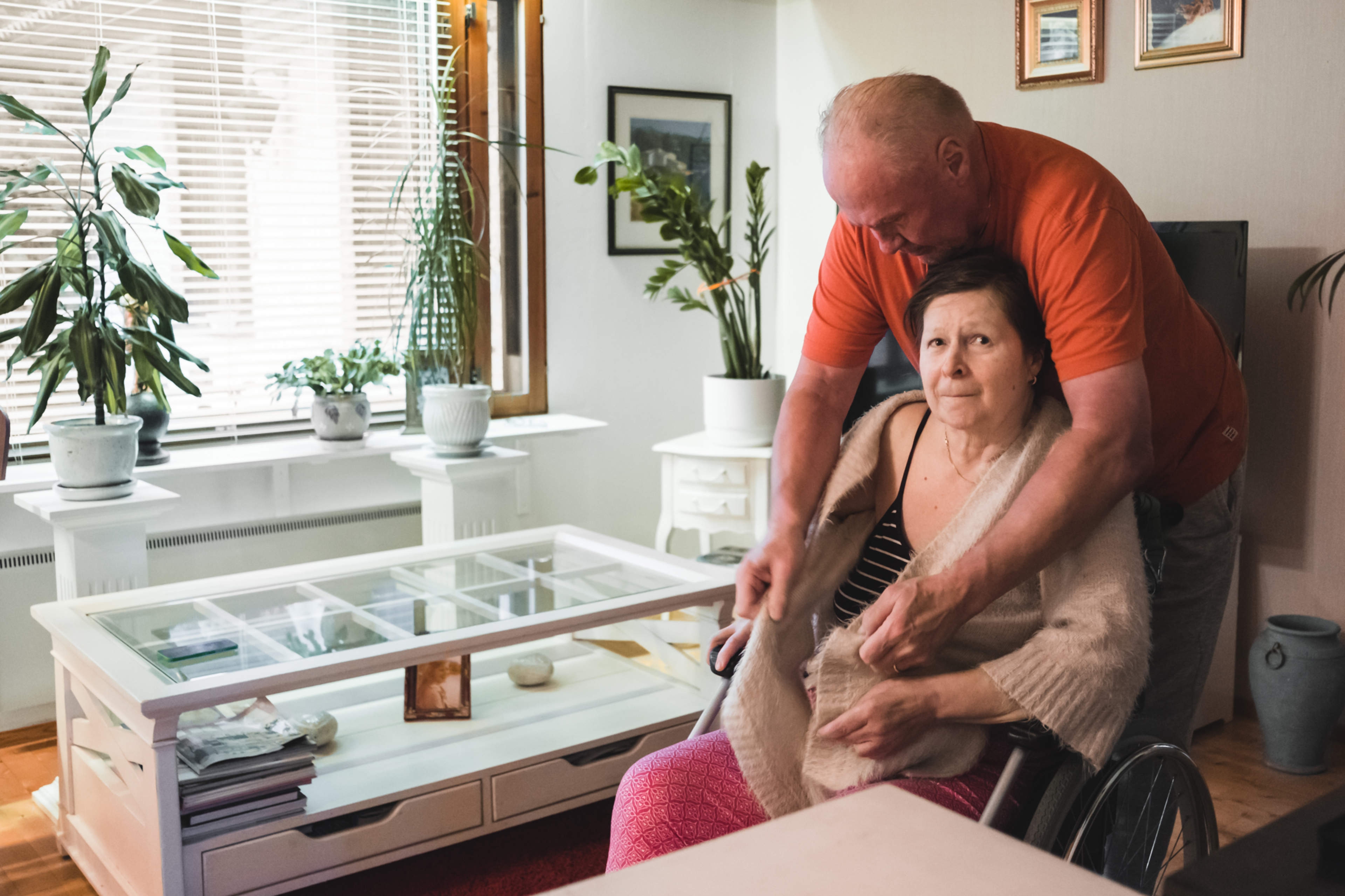
Prerequisites for hospice care at home include the patient’s desire for the arrangement and the home providing sufficient facilities for good care, in terms of things such as bathing and moving around. Unless the setting is a nursing home, hospice care at home often requires the presence of a loved one. Expert help is available 24/7, and plans have been made in advance for a backup place of care where the patient can be transferred to in case care at home becomes unfeasible. Admission to inpatient care should be made possible without the need to visit the emergency department.
When planning for hospice care at home, an individualised care plan is made in cooperation with the patient and their loved ones, going over the patient’s stage of illness, reviewing the patient’s living will (if one exists), and determining treatment intent. Before moving to care at home, the patient’s symptoms must be sufficiently attended to. It’s advisable to prepare the care plan in advance – for example, in specialised healthcare or during the first home visit. The plan is reviewed and updated as the situation warrants.
When hospice care takes place at home, the care staff is not constantly present but can be reached at all times. It’s important to be prepared for what might happen. The patient’s loved ones can’t make medical decisions regarding the patient’s care – responsibility for the treatment always lies with the attending physician. The key role of the patient’s loved ones is to be there for the patient and to assist with the patient’s care according to their capacity.
In many regions, hospice care at home is provided by home hospital services or via home health care. Information on how hospice care at home is organised in your region can be found in the Palliative Hub section "Services":
When preparing for a planned death at home, it’s advisable to talk to the care staff and go over the symptoms and changes in the patient’s condition that may be encountered as death approaches, as well as plans for how to react if they happen. It’s important to discuss any fears or concerns with the care staff ahead of time.
The care staff can provide written instructions for what to do when the patient dies at home. In practice, it’s often enough to inform the home hospital or the home hospice care team about the patient’s passing. When a death at home was expected, there is no need to call the police. A doctor will come to verify the death at home; alternatively, the deceased will be transferred to a location where the doctor verifies the death.
The protocol regarding verification of death during and outside office hours varies by region. There is no set time for when the deceased should be transported from the home; the schedule is agreed upon with the care staff. The funeral home takes care of the transport.
Prerequisites for hospice care at home
Prerequisites for hospice care at home include the patient’s desire for the arrangement and the home providing sufficient facilities for good care, in terms of things such as bathing and moving around. Unless the setting is a nursing home, hospice care at home often requires the presence of a loved one. Expert help is available 24/7, and plans have been made in advance for a backup place of care where the patient can be transferred to in case care at home becomes unfeasible. Admission to inpatient care should be made possible without the need to visit the emergency department.
Planning for hospice care at home
When planning for hospice care at home, an individualised care plan is made in cooperation with the patient and their loved ones, going over the patient’s stage of illness, reviewing the patient’s living will (if one exists), and determining treatment intent. Before moving to care at home, the patient’s symptoms must be sufficiently attended to. It’s advisable to prepare the care plan in advance – for example, in specialised healthcare or during the first home visit. The plan is reviewed and updated as the situation warrants.
When hospice care takes place at home, the care staff is not constantly present but can be reached at all times. It’s important to be prepared for what might happen. The patient’s loved ones can’t make medical decisions regarding the patient’s care – responsibility for the treatment always lies with the attending physician. The key role of the patient’s loved ones is to be there for the patient and to assist with the patient’s care according to their capacity.
In many regions, hospice care at home is provided by home hospital services or via home health care. Information on how hospice care at home is organised in your region can be found in the Palliative Hub section "Services":
Death at home
When preparing for a planned death at home, it’s advisable to talk to the care staff and go over the symptoms and changes in the patient’s condition that may be encountered as death approaches, as well as plans for how to react if they happen. It’s important to discuss any fears or concerns with the care staff ahead of time.
The care staff can provide written instructions for what to do when the patient dies at home. In practice, it’s often enough to inform the home hospital or the home hospice care team about the patient’s passing. When a death at home was expected, there is no need to call the police. A doctor will come to verify the death at home; alternatively, the deceased will be transferred to a location where the doctor verifies the death.
The protocol regarding verification of death during and outside office hours varies by region. There is no set time for when the deceased should be transported from the home; the schedule is agreed upon with the care staff. The funeral home takes care of the transport.
Related to topic
Updated 31.3.2025